
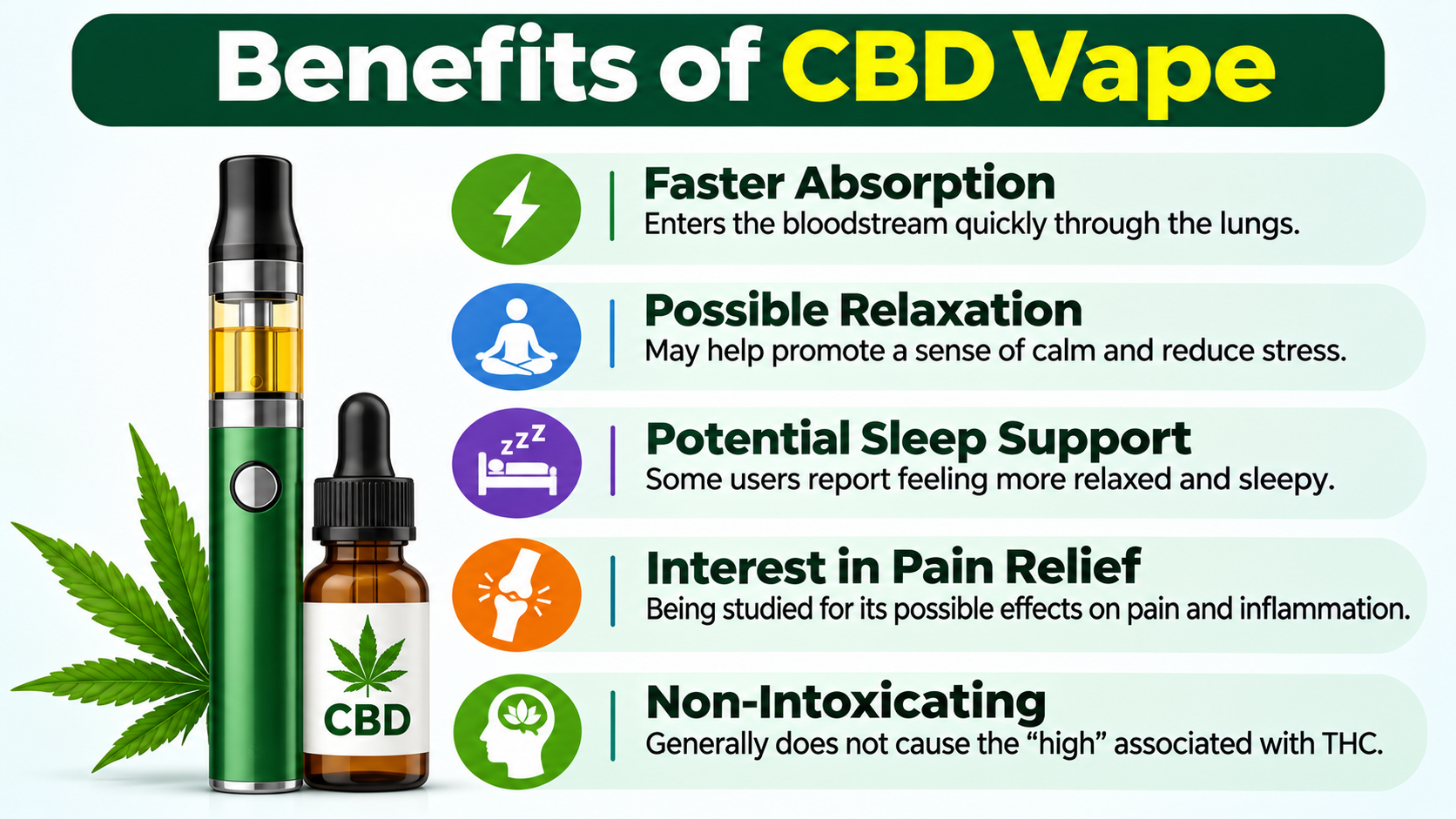
The benefits of CBD vape have attracted attention among people interested in cannabidiol and its possible wellness applications. CBD is a naturally occurring compound found in cannabis plants that generally does not produce the intoxicating effects associated with THC. Vaping delivers CBD through inhalation, allowing relatively rapid absorption. However, scientific evidence supporting the health benefits of vaping CBD remains limited, and inhaling vape aerosols carries significant risks.
What Is CBD Vaping?
CBD vaping involves inhaling an aerosol containing cannabidiol through an electronic vaping device.
Unlike oral CBD products, inhaled CBD enters the bloodstream through the lungs rather than passing through the digestive system first.
Researchers have studied this delivery method because it can produce faster absorption.
However, faster absorption does not automatically mean greater safety or better medical results.
Potential Benefits of CBD Vape
1. Faster CBD Absorption
One frequently discussed advantage of inhaled CBD is its rapid entry into the bloodstream.
Research comparing inhaled and oral CBD formulations has found that inhalation can produce higher blood concentrations more quickly.
Nevertheless, these findings do not establish that commercial CBD vape products effectively treat medical conditions.
2. Possible Relaxation Effects
CBD has attracted scientific interest for its potential effects on anxiety and stress.
Some preliminary studies of CBD suggest possible anxiety-related benefits, although findings vary according to dosage, formulation, and study design.
There is insufficient evidence that vaping CBD reliably reduces everyday stress or treats anxiety disorders.
3. Potential Sleep-Related Effects
Researchers have also investigated whether CBD influences sleep quality.
Some users report feeling relaxed or sleepy after taking CBD.
However, clinical research has not established CBD vaping as an effective treatment for insomnia.
People experiencing ongoing sleep problems should seek appropriate medical guidance.
4. Interest in Pain Management
CBD is being studied for possible effects on pain and inflammation.
Certain cannabinoid-based treatments have shown benefits in specific medical contexts, but research findings cannot automatically be applied to CBD-only vape products.
There is currently insufficient high-quality evidence to recommend CBD vaping as a proven pain treatment.
5. Generally Non-Intoxicating Properties
CBD differs from THC because it generally does not cause the characteristic cannabis high.
This distinction attracts people interested in cannabidiol without THC-related intoxication.
However, some CBD products may contain THC or other unwanted substances, making product quality an important concern.
What Are the Risks of CBD Vaping?
Despite interest in the potential benefits of CBD vape, inhalation creates additional health concerns.
Vape aerosols can contain harmful chemicals, fine particles, and contaminants that may irritate or damage the lungs.
CBD itself may cause drowsiness, liver injury, or interactions with certain medications.
The long-term effects of regularly inhaling CBD remain uncertain.
Is CBD Vape FDA-Approved?
The US Food and Drug Administration has not approved CBD vape products for treating medical conditions.
The FDA has approved a purified oral CBD prescription medicine, Epidiolex, for certain seizure disorders.
That approval does not establish the safety or effectiveness of vaping CBD.
Final Thoughts
The potential benefits of CBD vape include faster absorption and scientific interest in relaxation, sleep, and pain-related effects.
However, these possibilities should not be confused with established medical benefits.
Because vaping exposes the lungs to potential harm, discussing CBD use with a healthcare professional is advisable, particularly when taking medications or managing health conditions.
